Drage koleginice i kolege,
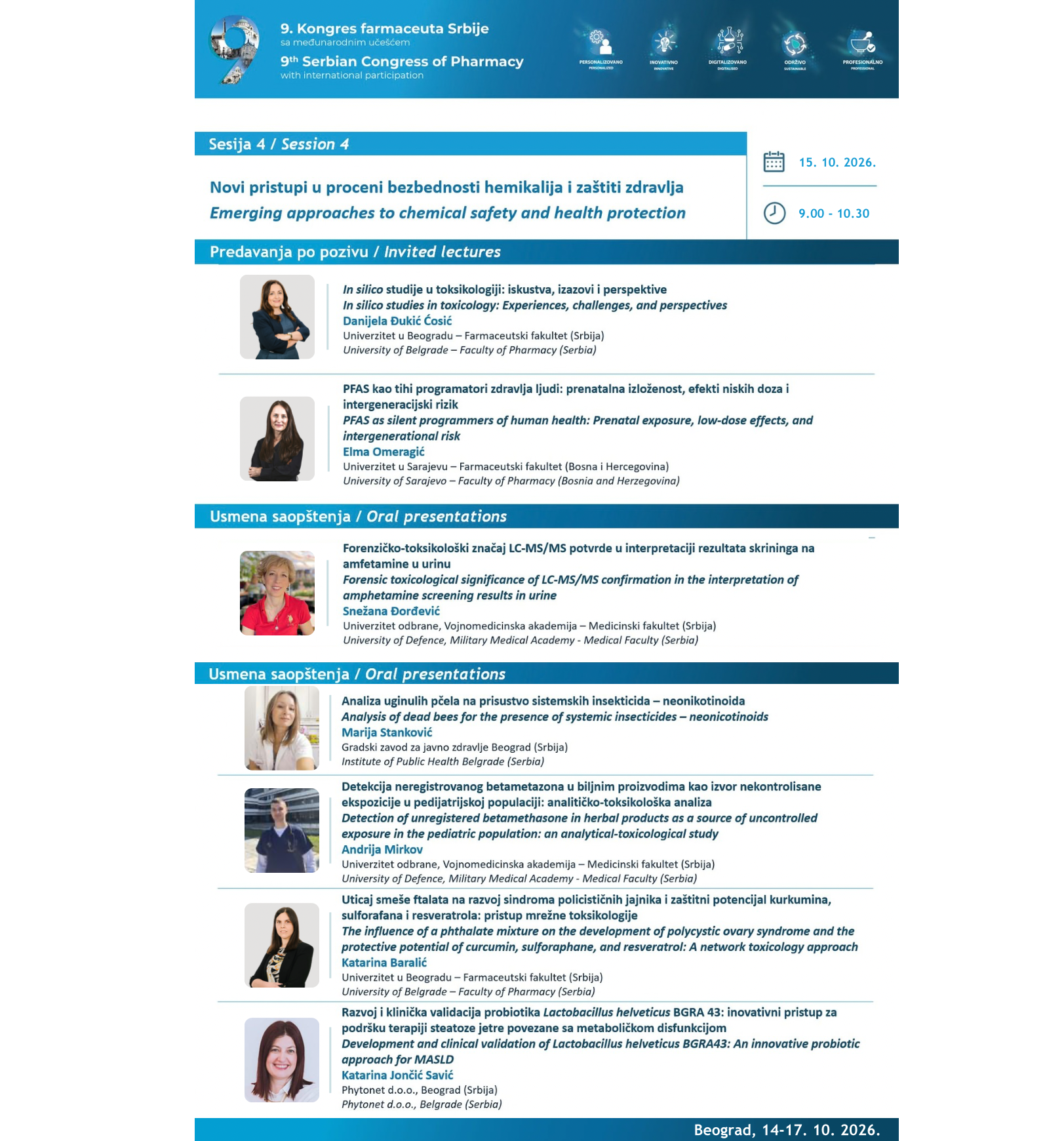
Procena zdravstvenog uticaja izloženosti hemikalijama danas zahteva integrisan pristup koji povezuje računarsko modelovanje, napredne analitičke tehnike i mehanistička tumačenja radi efikasnije prevencije i zaštite zdravlja.
U okviru Naučnog programa 9. Kongresa farmaceuta Srbije sa međunarodnim učešćem, Sesija 4 donosi celovit uvid u savremene metode i izazove kroz temu:
“Novi pristupi u proceni bezbednosti hemikalija i zaštiti zdravlja”.
U okviru ove sesije govoriće se o ulozi in silico studija u proceni rizika, o PFAS hemikalijama kao perzistentnim kontaminantima i njihovim potencijalnim prenatalnim, niskodoznim i intergeneracijskim efektima. Program obuhvata i značaj potvrdne LC-MS/MS analize u forenzičkoj toksikologiji, detekciju neonikotinoida kod pčela kao pokazatelja ekološke kontaminacije, kao i analizu neregistrovanih supstanci u biljnim proizvodima. Pored toga, biće reči o primeni mrežne toksikologije za analizu uticaja smeša ftalata na endokrine i reproduktivne poremećaje, uz prikaz inovativnog pristupa za podršku terapiji steatoze jetre povezane sa metaboličkom disfunkcijom (MASLD) na bazi probiotika.
U nastavku se upoznajte sa rasporedom predavanja i temama u okviru ove sesije!
Dear colleagues,
Assessing the health impact of chemical exposure today requires an integrated approach that combines computational modelling, advanced analytical techniques, and mechanistic interpretation to support more effective prevention and health protection.
As part of the Scientific Programme of the 9th Serbian Congress of Pharmacy with international participation, Session 4 will provide a comprehensive insight into contemporary methods and challenges under the theme:
Emerging approaches to chemical safety and health protection
The session will explore the role of in silico studies in modern risk assessment, as well as emerging evidence on PFAS as persistent environmental contaminants with potential prenatal, low-dose, and intergenerational effects. The programme will also address the importance of confirmatory LC-MS/MS analysis in forensic toxicology, the detection of neonicotinoids in dead bees as an indicator of environmental contamination, and the detection of unregistered substances in plant products.
In addition, the session will highlight the use of network toxicology to explore the effects of phthalate mixtures on endocrine and reproductive disorders, alongside an innovative probiotic approach to supporting the management of metabolic dysfunction-associated steatotic liver disease (MASLD).
Take a look at the programme below and discover the lectures and topics in this session!